Visual Studio Code
Visual Studio Code
Section titled “Visual Studio Code”The base editor — most “VSCode Fork” notes in this folder are forks of this
https://code.visualstudio.com/
https://x.com/code
Features
Section titled “Features”- The origin of the “VS Code fork” category: Cursor, Windsurf, Kiro, TRAE and most of the agent IDEs in this collection started as forks of VS Code (via its MIT-licensed “Code - OSS” core)
- Open-source AI editor: Since May 2025 Microsoft has been moving Copilot Chat and AI features into the core, MIT-licensed codebase instead of keeping them proprietary
- Agents window: A dedicated surface (public preview) to manage multiple agent sessions in parallel — compact diffs, file-level stats, session notifications, and “Agent Merge” (an agent that works review feedback / failed checks / merge conflicts until your PR is mergeable)
- Agent Host + AHP: A dedicated process that owns agent sessions (open Agent Host Protocol) — sessions survive closing the window, sync across multiple clients/windows, run locally or remotely, and support multiple agent harnesses (Copilot, Claude, Codex)
- GitHub Copilot coding agent: A GitHub-hosted cloud agent — assign a GitHub issue to @copilot and it works autonomously in an isolated environment, self-reviews, and opens a PR for you
- Multi-harness + BYOK: Run Copilot (Copilot SDK), Anthropic’s Claude agent, or OpenAI Codex in the same editor; bring your own API keys; worktree isolation so parallel sessions don’t clobber each other
- The default editor: ~76% of developers use it (2025 Stack Overflow survey) — by far the most-used editor in the world
Summary
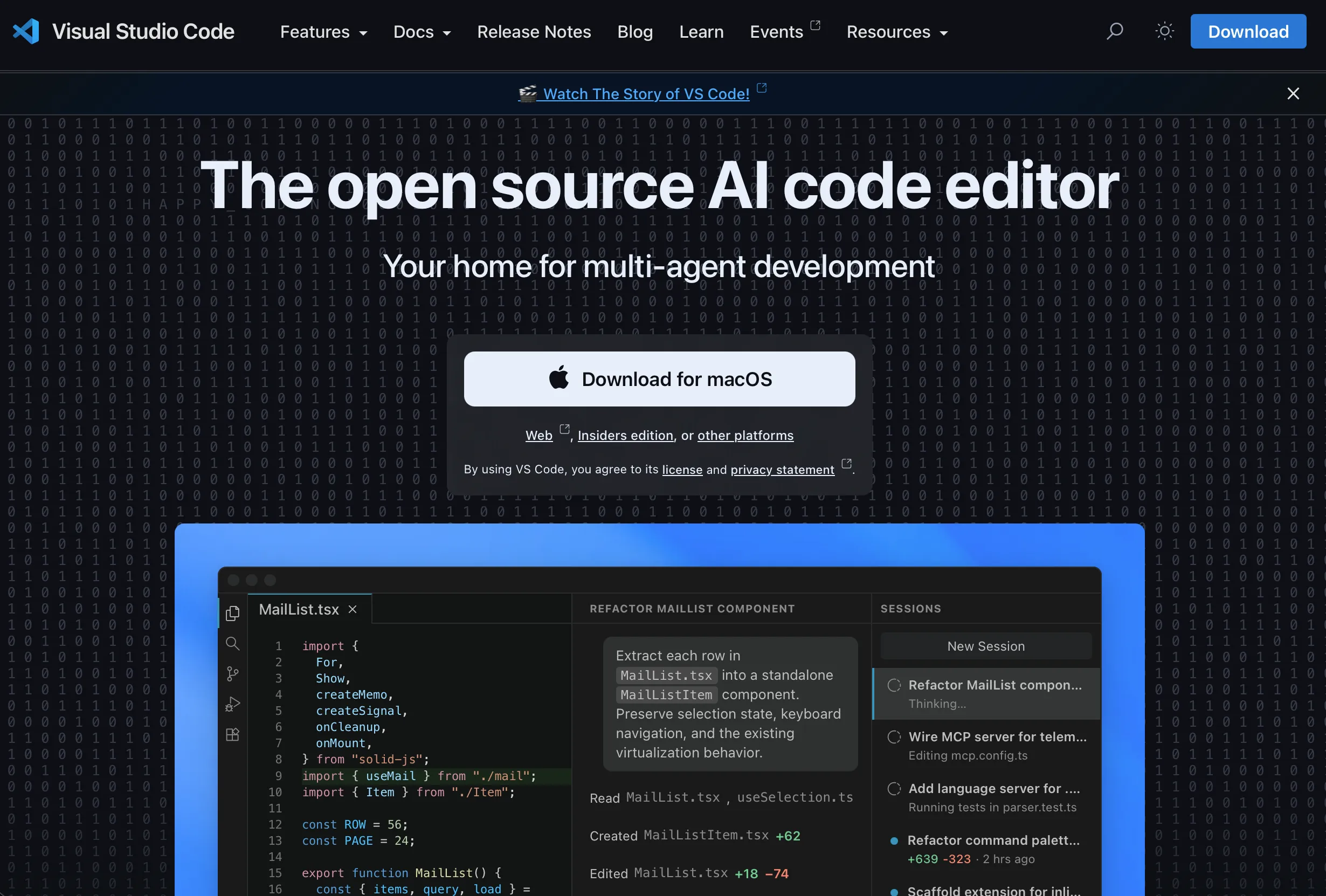
Section titled “Summary”One of the most striking things about VS Code is how it became the de facto base layer of the entire AI-coding boom: nearly every “agent IDE” in this folder is a VS Code fork, which is why they all feel so similar out of the box. Rather than being disrupted by its own forks, Microsoft has leaned into being the neutral home for agents — open-sourcing the AI editor (Copilot Chat under MIT, May 2025), then building the Agent Host so any agent harness (Copilot, Claude, Codex) can run in a shared, portable, multi-window session, all behind the now-standard tagline “The open source AI code editor — your home for multi-agent development.”
What makes it the safe default for most people is the combination of ubiquity and extension ecosystem: thousands of language tools, debuggers, and themes, free for individuals, with Copilot (free tier through paid plans) layered on top when you want agents. If a fork gives you a better editor for a specific job, VS Code remains the reference point — and, thanks to AHP, increasingly the protocol layer that other agent clients speak too.
2026.09.08
Section titled “2026.09.08”Status: active — and now the center of gravity for the whole agent-IDE scene. v1.136 shipped Sep 2, 2026; the agent work is shipping fast:
- Agent Host / AHP went live (announced Aug 26, 2026): a standalone process owning agent sessions — start in the editor, continue in the Agents window or remotely; open protocol with client libraries in Rust/TS/Kotlin/Go/Swift (
code agent host). - Agent Merge (preview): an agent that takes a PR across the finish line — resolves review feedback, failed checks, and merge conflicts, iterating until it’s mergeable.
- Copilot coding agent matured (Feb 2026+): model picker, self-review via Copilot code review, built-in security scanning (code/secret/dependency — free), custom agents, CLI handoff.
- Rubber Duck (experimental):
/rubber-duckgets a second opinion from a complementary model on the agent’s work; also Agent Plugins 1.0 (portable agent customizations across agents) and multi-root workspaces across agent sessions. - One honest caveat: local-harness sandboxing was pulled back to 0% rollout in Aug 2026 while they focus on the agent host — so “agents running in your box” is still maturing, not locked down.